2018 was a tough year for fund managers. Markets were unforgiving and saved a lot of the angst for the last month of the year. Performance suffered and what the Financial Times labels “flowmaggedon” , where we saw very hefty outflows from funds across a wide range of asset, combined to hit the P&L accounts at fund management companies. According to the FT, the sector lost a quarter of its value in 2018.
Asset management CEO comments in the first few weeks of the year haven’t been all that up-lifting. Active fees continue to be ground down under pressure from the growth in indexed, cheaper alternatives. In US equity funds as an example it is now 50/50 between active and passive. This will continue. Here in Ireland auto-enrolment, with its cap on fees, will be further highlight the cost gap.
We have also seen this year further indications of the road map that regulators have for the asset management industry. At the start of February the FCA in the UK issued further rules for the industry on fund benchmark and fee disclosures. While there are a number of issues the key question that the regulator wants to help the consumer answer is:
“Is my fund manager doing a good job?“
Performance benchmarks come under scrutiny. Why were they chosen? Are they appropriate? How can we assess the manager’s performance relative to that benchmark? If fund managers work under a tracking error constraint, the degree of divergence will need to be highlighted.
And if the manager doesn’t use a benchmark there has to be some way for the customer to answer the same question – how do I know this manager is doing a good job. This could well be the case in multi-asset or outcome orientated-products. The level of risk taken on to deliver returns will be under the microscope.
And these performance disclosures will have to be as straight and jargon free as possible. As the CFA noted, it is about protecting those customers least able to actively engage with their investments.
Good fund managers do all of the above already – it now becomes a hurdle for all.
Regulators globally are all on the same hymn sheet so we can confidently expect a similar pathway in all jurisdictions.
In this regard it is very interesting to see what the prudential regulator in Australia is proposing, in seeking to address the issue of poor performance. Like the UK, greater clarity on performance benchmarks and investment outcomes is being demanded. But also the Australian regulator is considering intervening in underperforming funds. Whether this could mean revoking licenses, forcing consolidation etc. is not clear but it would certainly be a major step.
Brave new world.

 We are smack bang in the middle of the “market outlook 2019” season. Despite the fact that economic and market fundamentals don’t really recognise the Gregorian calendar, economists, strategists, commentators et al, rush to give their views on what the next 12 months holds – usually conveniently forgetting what they may have said at the start if 2018!


 What do you think? Do they know their Verdi from their
Vardy?, Van Gogh from Van Morrison, or their Rigoletto from their cannelloni?
Hard to know really!
But this culture thing seems to be getting more and more attention.
In Ireland the Central Bank has been devoting a lot of resources to this issue
and getting the banks to refresh/redefine/find their appropriate culture.
My initial reaction used to be that this type of thing was a
bit waffly, with little real world application. Management consultants immersed
themselves in these concepts, and for a reasonable fee their clients could dip
a toe in, as required.
But if we strip away a lot of the jargon and think of
culture as just being “the way we do things around here” (Bower), I think it
becomes more meaningful in an asset management context, and should be
considered in evaluation, selection and review of managers.
Towers Watson and Roger Urwin have been flying the flag on
this for many years. Since the early 1990s it has been a critical component in their
formal manager evaluation. For them, culture is a unique ingredient in
generating alpha and a bedrock on which a competitive advantage is sustained
over a long term. They have published good research on the topic, seeking to
define and measure what constitutes culture in an asset management context.
This is by no means an exact science. Factors involved will
typically include leadership, ownership, procedures, policies, diversity, respect,
remuneration etc.
Should we care? – or should we only care about investment
outcomes.
Positive culture should underpin alpha generation and
importantly (in my view) its persistence. However there my be times when strong
performance can disguise a weak culture. Equally weak performance can
exacerbate culture issues.
How does a solid asset management culture deal with
disappointing performance. I read one of GMO’s quarterlies recently where they
spoke about the importance of “crying over spilt milk”. This means when things
go wrong, try and understand why, and see what might be done better. Other
managers speak of having a WWW (what went wrong) wall, noting poor investment
decisions and focussing solely on the learning points. I think that
acknowledging poor performance (because it will happen!) is a necessary and
positive aspect in a good asset management culture. Investors and selectors
should view it similarly.
In recent weeks, a named lead manager for a large
blockbuster fund that had been through over 5 years of failure to meet targets,
suddenly announced a decision to leave. So I presume there had been 5 years of
meeting with clients justifying and defending performance and process again and
again. But conviction may have morphed into stubbornness and It seems to me
that the final outcome (manager departure) didn’t really do clients any
favours.
Maybe a culture where there was some crying over spilt milk
and learning opportunities sought along the way would have served clients (and
the asset manager) better.










 So anyway there I was listening to Morning Ireland, and this chap, who used to be big name in the ESRI, giving their highly thought of views every quarter, garnering acres of media coverage and attention, but now he’s saying “I’m not in the forecasting business anymore so I don’t have to pretend that I have a great sense of what’s actually going to happen”
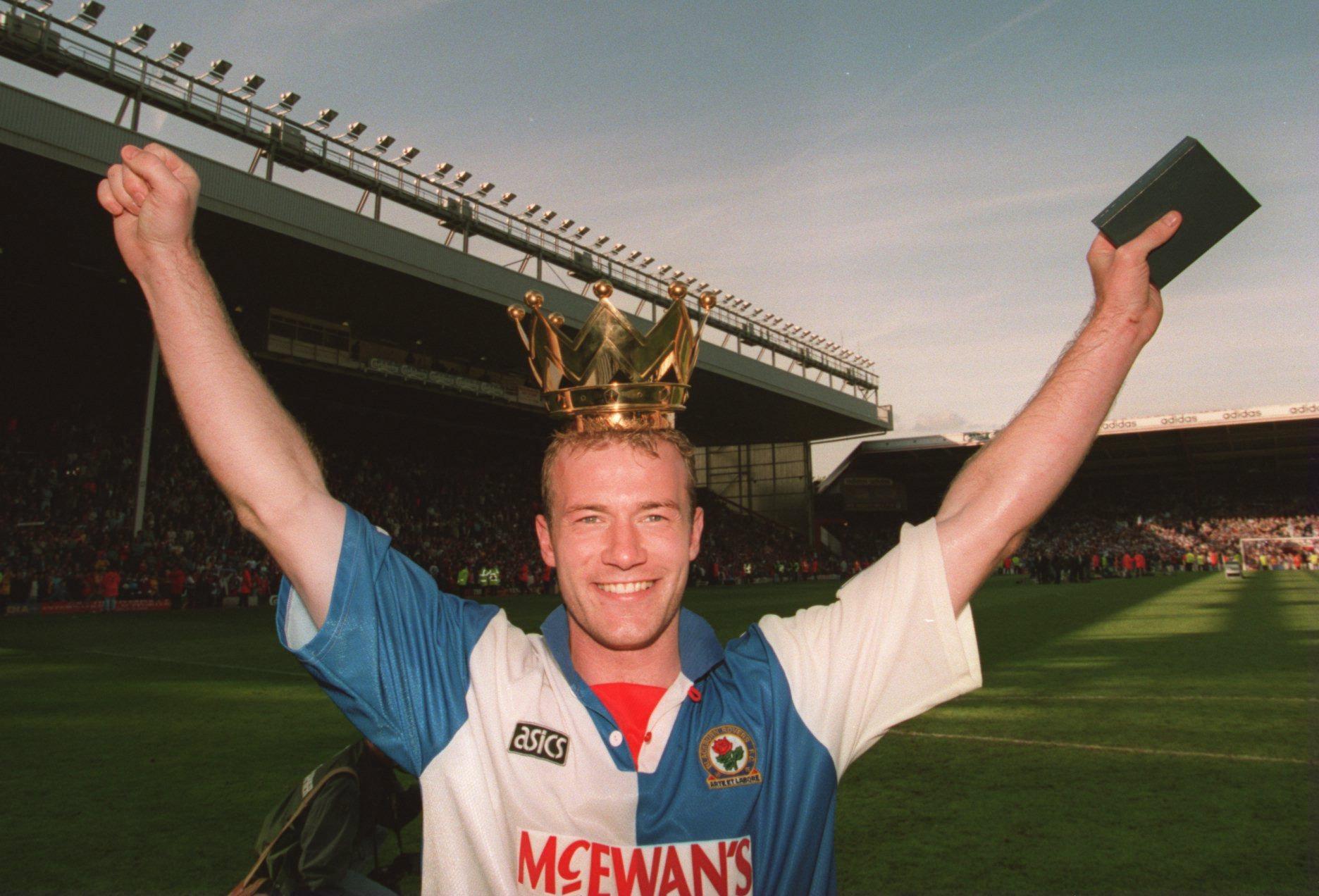 It was a Sunday evening in August way back in 1993. I was stood in that cauldron of emotion, United Park, where Drogheda United were playing Blackburn Rovers in a pre-season friendly. Blackburn were on the verge of greatness at that point. The first half was scoreless, which was a very good performance from Drogheda United. Kenny Dalglish wasn’t happy. He kept his team on the pitch at half time. Second half – no real change. The he sent on Alan Shearer who nonchalantly scored a couple of goals and basically ended the match. That late summer evening in United Park, I had seen a “game changer”