Property investors believe (hope) that they have seen the bottom of the Irish commercial property market.
And commercial property portfolios in Ireland today are still essentially driven by the performance of the office sector.
I looked at the property exposure of the big institutional funds, including pension funds, and the office component of these portfolios ranges from over 45% to around the 70% mark. The balance being retail, logistics and some residential.
After a sluggish start to 2024, and given significant drops in asking prices, we did see some stability in the office market at the back end of 2024. Analysts, with a positive outlook, lean on likely further cuts in interest rates and a growing local economy to support their constructive case.
So what are the numbers? How does the Dublin Office market stack up today?
Take-up of office space in 2024 was much better than 2023 but still below the long term average. Take-up was just north of 2 million sq ft. It was interesting that we saw an increase in deal size over 2023.
The Financial Services sector represented the biggest cohort of demand for space – including names such as Deloitte, Aon, BNY and EY.
The vacancy rate is bubbling around 18%, but some view this as the peak. This overall vacancy rate includes many properties that lack sustainability criteria. It’s not directly comparable, but good research from Cushman & Wakefield suggest that over 60% of Dublin office property is at risk of becoming obsolete. This is actually quite healthier than many other European cities.
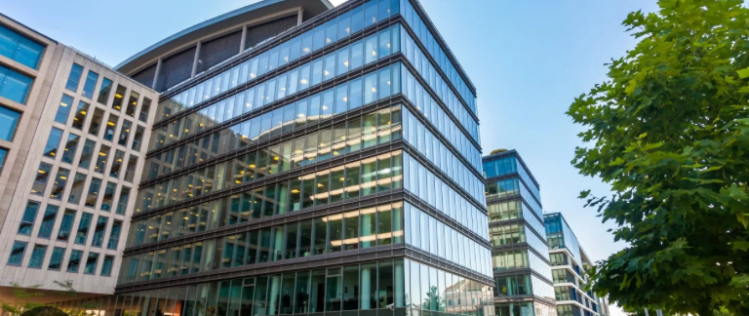
A lot of new space in Dublin, as well as being best in class on sustainability grounds, also has strong cultural linkages to the local environment. 15 George’s Quay and Wilton Place are prime examples.
In terms of supply, it appears that the delivery of new office space in 2025 will be low – and much of that is pre-reserved. Prime office rents are about €62 per square foot but tighter supply could see a small rise in these levels. This leaves the current yield for prime, well located, sustainable stock at about 5%.
It seems a reasonable investment proposition, given 10 year government bond yields at 2.7% and valuations in stock markets that are fairly full.
But there are two mega-trends that property investors need to include in any assessment.
I think it’s clear now that we are past the peak in “working from home”.
Certainly many US companies (Amazon, JP Morgan) have called a halt in all their operations. Others are looking to increase the numbers of in-office days. The much vaunted Work Life Balance Act has to date mainly ruled in employers’ favour. A recent survey from Dublin Chamber showed a sizeable percentage of employers view in-office working as more productive. I suspect we may see an aggregate increase in days in the office – especially from large multi-national firms. A big driver of this will also likely be the overall strength of the jobs market. Much of the reason why WFH still holds sway is a very tight labour market. A softer jobs market shifts the pendulum away from the employee who wants to work remotely.
The second major trend that can influence the Dublin Office market revolves around economic activity, and more specifically the health of FDI flows. Recent political changes in the US, and potential changes in the global corporate tax landscape, mean that risk levels here are now more elevated. FDI has been a significant force nationally and in the capital. Any reversal here could have a major impact on supply/demand dynamics in the office market, as well as general government finances. BNY in Wexford shows how global decisions translate into local actions.
So, for investors in office property, the current numbers stack up, but it is important to be vigilant around these two major trends.
 Tradewinds