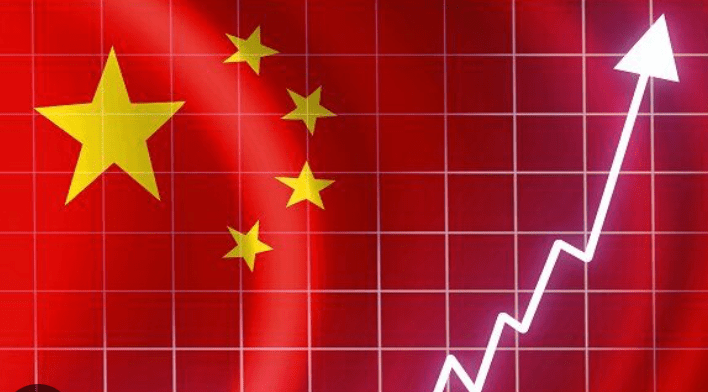
It used to be Top of Mind for investors.
China was an economic power house driving global markets and commodities. Posting annual growth rates of 10% and more in the early 2000’s, the health of the Chinese economy was a critical box to tick in building a positive case for financial investors.
Not any more.
2024 was a good year for investors. Global stocks rose over 20%. And this has coincided with a Chinese economy that has been mired in gloom. Official data suggests economic growth of about 5%. But the consumer has never really recovered since Covid. Confidence is low. Debt remains a huge burden. Property prices are still falling.
So can we say it doesn’t matter anymore?
As always there are two aspects to investing – risk and return. Last year may have shown that global market returns can decouple from a sluggish China. But China may still have a role to play as regards the overall risks that investors face in 2025 and beyond.
The near term economic picture is essentially for more of the same. Xi Jinping’s New Year message, while it did highlight the economy, did little to suggest renewed vigour. The measures we have seen over the past 12 months have been basically ineffective and while further policy measures may be announced in March, expectations are low.
Most forecasts point to another year of about 5% growth. Some commentators suggest that real on the ground activity reflects an economy growing at 3%. China expert George Magnus believes that the potential sustainable rate of growth for China over the next 10 years is more like 2.5 – 3%. That wouldn’t leave much wriggle room.
The China issue which garners the most headlines is Trade. Contradictory signals on possible levels of US tariffs on Chinese goods in the first few days of 2025 have led to significant wobbles in both Chinese stocks and the Yuan. If tariffs were imposed at the suggested higher levels, it could knock about 2.5% off economic growth. This would be a massive shock to a relatively fragile economy. At the very least it will be an ongoing source of volatility.
The other avenue of risk is in how the currency reacts. The Yuan has hit a 16 month low compared to the US dollar in the first few days of the year. The tightly controlled currency has reached 7.33 per US dollar, it’s weakest level since September 2023. In the past, the currency has been a source of wider volatility. Policy-driven currency fluctuation in August 2015 roiled stock markets and provoked significant capital outflows. The question will be how determined Beijing will be to defend the currency and what implications this could have for the domestic economy and financial markets.
It’s hard to paint a positive picture of the economy given the low levels of consumer confidence and the ongoing weakness in property. 70% of family assets are held in property and housing accounts for 20% of the economy. Today property prices are still falling. Sustained weakness in the economy could have domestic social and political consequences.
It will be hard to turn this around.
China still matters. And investors need to be vigilant.
But, rather than driving global growth, China looks more likely to be a source of risk in 2025.
 Tradewinds