Maybe the single most important question for investors.
Economists discuss, debate and differ over whether or not the US economy is headed for a recession.
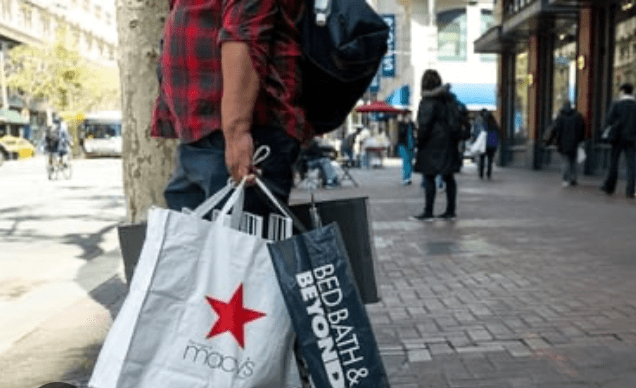
Let’s put the theories to one side, focus less on Wall Street, and look at what’s actually happening on Main Street.
Just how healthy is the US consumer?
This is the key question for the US economy. The consumer, by the most recent data, accounts for just under 70% of the economy overall.
And looking at actual retail sales data up to mid-summer, the US consumer has stalled. On an annual basis, consumer spending is just grinding higher by about 2.7%. And this was helped by a better July outcome, due to a recovery in autos, following a prior slump.
But away from the official statistics, what are we seeing on the ground?
In recent weeks we have had a unique window into the state of the US consumer, as many of the leading consumer-facing companies post their earnings, results and outlooks.
And if there was one watchword to sum up how CEOs and CFOs view their customers today, it is “cautious”.
The CEO of Pepsi described their customers as “cautious and choiceful”. Demand for many Pepsi products has been subdued. The consumer is looking for value and the company is looking to respond by lowering entry level prices.
It’s a similar picture over at fast food giant McDonalds, where their most recent set of results showed an actual decline in customer revenues in North America. McDonalds are feeling the most pressure among lower income households and they expect little let up in the near future.
Marquee names such as Hershey, Heinz and Starbucks all paint a similar down-beat picture.
Home Depot, the giant home improvement company, has cut sales forecasts for this year by up to 4%. A few months back they felt revenues would be close to flat. One retailer which bucked the trend was Walmart, with its ‘every day low prices’ mantra, which is seeing better consumer numbers in 2024. But this in itself could be due to consumers trading down as they seek out value.
This cautious customer in the food and drink arena extends to sectors like travel and leisure. Airbnb is forecasting a slowdown in travel and seeing signs of a slowdown in demand from US guests. Bookings are also occurring later. The picture is similar at Hilton Hotels where management categorize the growth rate as being very, very, low, and feel the market is definitely softening.
It looks like the period of revenge travel and spend is coming to an end.
What’s behind this caution? Quite simply the US consumer is stretched. Take credit cards as an example. Credit card debt has surged. Since early 2021, credit card balances have rocketed upward by 48%, fuelled by a post-pandemic boom in services spending. And Americans are falling behind in their repayments. Delinquency rates for credit card users are reaching fresh highs. According to the New York Federal Reserve, over the last year, over 9% of credit card balances have moved into delinquency. Car loans are not that far behind. We haven’t seen levels like these in 12 years.
And while debt is up, savings are down. Last week, research from the San Francisco Fed noted that a lot of the cash savings built up during the pandemic have now run dry, and this is most prevalent among lower income families.
It’s not surprising that consumer confidence levels are off. The Michigan Survey last Friday pointed to flat-lining consumer sentiment levels and a view on current economic conditions 20% below 12 months ago.
So with low confidence, low savings and high debt could the American consumer be running out of gas?
Probably.
 Tradewinds