Last week, two of the world’s most powerful leaders met in San Francisco. One representing a resilient economy with continuing impressive growth in numbers of people working. The other heading up an underperforming economy with huge issues in key sectors such as property – but China still matters.
For many investors, China is just a number.
Markets wait on the quarterly GDP number to assess whether the Chinese economy is back to its former glory when growth rates of around 12% were commonplace, or whether the more recent pedestrian figures of 5% prevail.
For what it’s worth, the most recent GDP reading was +4.9% for the third quarter this year – broadly in line with expectations but well below the 6.3% for the previous quarter and the IMF is forecasting a sluggish 4 % for 2024 and little improvement thereafter. Recent manufacturing data also pointed to continued contraction.
By historic standards these are disappointing numbers and there’s been a disappointing feel, a sense of drifting, in much of what’s gone on in the People’s Republic this year. From the start of the year there was a view that finally coming out of Covid would see an economic rebound with some degree of “revenge spending” – much as we saw in the US and elsewhere. Western economists expected a full-throated economic revival.
It didn’t happen.
And the lack of real policy response also unnerved commentators. In previous downturns, the investment burners were turned on, and China (and many global sectors) surged. Instead we got marginal reductions in interest rates and small tax changes in stock market transactions. Coupled with a cumbersome exit from Covid, it made many doubt the degree of policy cohesiveness.
There didn’t seem to be a Plan B.
Problems in the Property sector haven’t helped. And to date this has been more a slow moving train wreck than a bust. More than half of China’s former top 50 developers have gone into default. Country Garden has defaulted on overseas bonds. Evergrande continues a tortuous path to restructuring. HSBC CFO Georges Elhedery believes we may have seen the worst in the China property saga, but it will be a multi-year recovery story. The scale of the problem supports the view that it will take time. Central Government is becoming much more interventionist in the housing market and it remains to be seen whether this will crowd out private initiatives. The entire property investment and shadow banking system are also going to be part of the remit of the newly formed Central Financial Commission (headed up by a Xi Jinping loyalist) – another example of party control.
Where is China’s focus then? The President recently hosted many world leaders to celebrate the 10th anniversary of China’s global investment effort – the Belt and Road initiative (BRI). Although investment performance has fallen well short of expectations and many developing countries are mired in debt as a result, Xi Jinping was keen to sing its praises and potential. This partly reflects the fact that the success or otherwise of the BRI is not purely short term financial but its aims are wider, reaching into areas such as national security, sustainable supply chains and Chinese jobs. With 1$ trillion lent over 100 countries it has dwarfed Western spending in many developing nations. However China must tread carefully here to avoid the perception of “debt trap diplomacy” and risk squandering its influence in the developing world.
But what about investment into China? This has in fact gone in the opposite direction.
Foreign Direct Investment has fallen 34% in the past year – the biggest decline since figures became available in 2014. The fall partly reflects the steady stream of lacklustre economic news as well as increasing political tensions. Many global companies now look to “near-shore” many of their activities as they focus on supply chain issues. One very telling datapoint is that Private Equity firms that invest in China raised over $5 billion this year. Two years ago, that number was $48 billion! This investment collapse isn’t going unnoticed in China and indeed at the recent BRI event, Xi Jinping announced some removal of restrictions on foreign investment. But really this needs the same level of effort as was applied to the BRI, as there are potentially big wins to be had in sectors such as batteries, electric vehicles and renewable energy.
It’s clear Chinese policy makers are not measuring success in GDP points. National security and Common Prosperity play an equal if not greater role. This is not the China of Deng Xiaoping. Government policy in clearly more intrusive in many sectors including Property and Finance – the Central Financial Commission is one example of this.
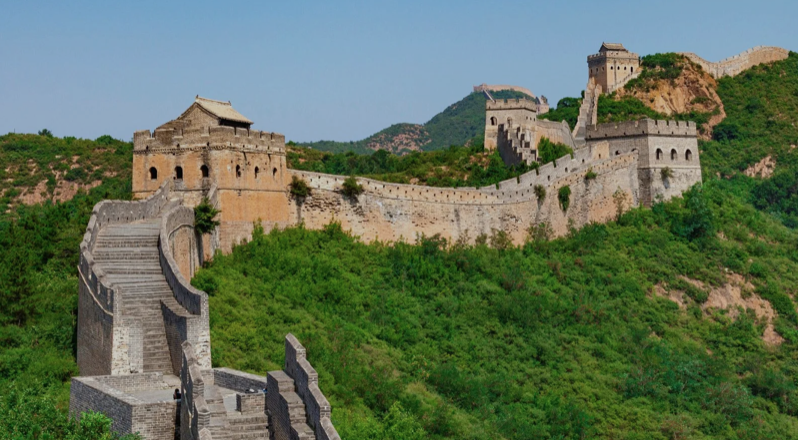
Some worry about what they term as the “Great Walling-Off of China”.
Ian Johnson, a Pulitzer prize-winning journalist, speaks of a turning inwards, political ossification and ideological hardening. When the economy was at its most dynamic, there was a social contract or implicit understanding – the government would allow (and promote) economic opportunity for the people in return for a give-up of some political freedoms. The slump in earnings and growth questions whether the contract is being upheld.
China does have structural issues to contend with such as demographics, but by definition there is no short term solution here. A highly entrepreneurial people seem to lack optimism. The slump in foreign investment and the poor performance of Chinese stock-markets (down 40% from 2021 highs) are reasonably objective red flags pointing to a need for a different response – or at least some response.
In this regard, it may be that the biggest issue for the Chinese economy is Chinese Politics.
 Tradewinds