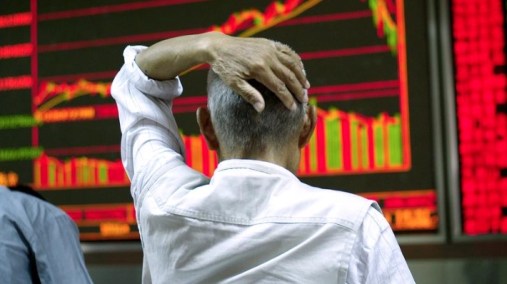
In recent days, the tone in stock markets seems to have changed from the panic tumbles on high volumes that we saw in mid-March. Volatility as measured by the VIX index has also reduced though still at elevated levels, but generally we have seen less of the 5-6% moves upwards and downwards on a daily basis.
A general read across what investment managers are thinking also suggests a degree of caution, though many are painting out what their exit strategy from the crisis will be, and how they will position portfolios accordingly for the ‘next new normal.’
The speed of the spiral downwards in markets is what many managers remark upon most, as well as the sheer scale of the monetary and fiscal action activated and proposed, that was required to stabilise markets at lower levels. Market moves reflected the ebb and flow of confidence that policy makers were alive to the seriousness of the issue. But now, governments and central banks have set their stalls out; and medical facts such as mortality and new cases have played a greater role in the past week. Political interpretations about those medical facts have played some role in market moves in the US.
Markets may scour the data for direction on a very short term basis, as we saw early this week, and we may see high frequency traders or hedge funds look to play. Given that the medical facts won’t move in a straight line, this means continued volatility, albeit at lower levels.
But large long-term investors are likely to look for clear, sustained, and meaningful improvements in the numbers to change their asset allocations to being more positive.
For investors, there are several features on the landscape that pose difficulties in framing or timing an appropriate investment strategy.
The actual degree of uncertainty in the current environment is unparalleled.
There is absolutely no clarity on economies or companies. For example, how bad will the US jobs market get? There is a very wide range of forecasts, with Goldman Sachs, for example, expecting US unemployment to peak in the third quarter at 15%. However at the same time, the Federal Reserve in St. Louis suggests a 30% unemployment rate is possible. It hit 25% during the Great Depression.
Forecasting company profits is even more problematic.
We simply don’t know.
Many companies have ceased making forecasts or giving guidance to analysts. Without such guidance, many analysts struggle to arrive at a meaningful number. Analysts have also in the past been slow to catch up to reality. At the start of the year, the average estimate from all analysts for company profits growth in the US this year was about 8% positive. Last week that estimate was -3%. But the final outcome, given falls in revenue and in margins, is likely to be an earnings hit closer to -30%. The sectors being hit the most include consumer discretionary and energy with consumer staples and healthcare holding up well.
It is clear that there is plenty room for shocks on both the macro and the individual company level.
Markets may also hold different challenges for different types of investors. Take the case of income investors – those funds that especially value the importance of dividend income in their investment process. This is a very significant group of funds in the UK for example. In an environment where many corporates will be starved of cash flow, paying cash out as dividends may put the overall enterprise at risk. So we will see certainly a reduction in dividends and in some cases cancelation. Regulators in the UK and Europe have urged banks and insurance companies to pause dividend pay-outs. Overall UK dividends are expected to be down by 50% and US by 25% in 2020.
Share buy-backs (which have been seen as a strong support for stock market levels) will go the same way. Many companies in the US have already suspended buy-back programmes and the expectations are that for the full year we could see a reduction of 50%.
Some investment managers fear a more inflationary environment in the future, as we may have supply constraints at the same time as fiscal and monetary policies stoke demand. While it could be an issue in the very short term, it is difficult to see inflation being top of the agenda. We know how long it takes for policy (especially monetary policy) to drive demand – the last six years of QE haven’t seen economies really take off. Also supply chains can be rebuilt. The experience from Avian Flu and SARS supports the view of little inflationary impact.
Given the overall and unparalleled level of uncertainty, it is not surprising that there is a range of views among fund managers. Some managers, such as hedge funds, may have very different time horizons and look to capitalise on shorter term market moves. Others may adopt very non – consensus views. One-UK based manager is using the Black Death of 1348 as their template for the timing and severity of the down turn. Most are somewhat less stark in their assumptions.
Broadly, investment managers at this point see the pandemic as a serious but temporary shock. They remain diversified and vigilant. A sustained improvement in the medical facts (fewer new cases), and some degree of visibility around corporate health, are what long term investors will look to, to frame the next stage of their strategy.
The investment risk is the same as the universal risk – as one fund manager put it: “a second wave of infections within countries that successfully controlled the first wave”. That would mean more drawn out economic contraction, more serious market impact and more overall uncertainty.
This originally appeared as an article in The Sunday Business Post on April 12 2020
 Tradewinds