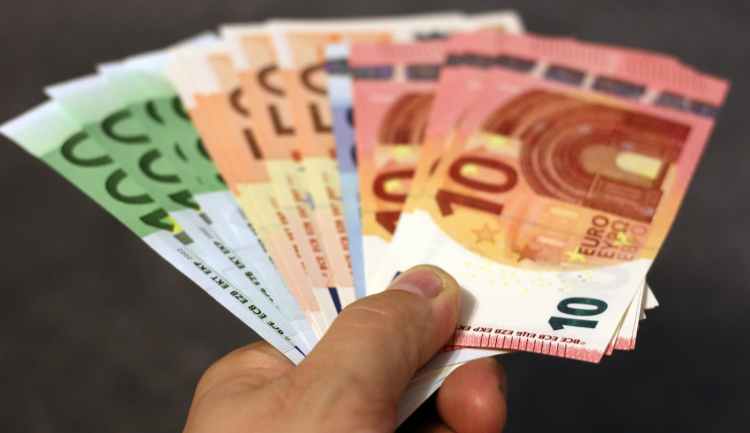
I know it’s always been the case, but lately in chatting through how markets have done, I find myself talking as much about currency moves as asset moves. Yet in my experience, currencies never feature that much whenever we try to look ahead. The talk at that point is more around asset fundamentals like economic growth, interest rates, profits etc.
But we can’t ignore currency if we’re putting money to work globally.
As that well known group of currency gurus, 10 cc, noted in Wall Street Shuffle:
“You need a yen to make a mark
You need the luck to make a buck”
And currency matters a lot.
I looked at 3 major currency blocks – US dollar, Yen and Sterling – over the past three years from the perspective of a Euro-based investor. In that period the return from investing in US stocks was almost entirely from the asset with actually little currency impact. In Japan, we got about 11% from the asset and in fact the same again from the move in the Yen. In the UK, a positive return of nearly 20% was more than wiped out by an even bigger move in Sterling. This is not about volatility – currencies should be less volatile than stocks- but lately they seem to be playing a bigger role in investment outcomes.
But I’ve rarely seen market commentators zoning in on what a currency might do over the next 12 months while they will happily talk/write at length about GDP growth rates and company profits.
Why is this? Are currencies harder to call? Are investment managers less comfortable/confident in managing risk and return in forex? Research shows that a lot of institutional fund managers simply accept the currency exposure that comes along with global investing. In explaining this approach to clients they may use highly technical language such as “swings and roundabouts”! (what you gain on the swings, you’ll lose on the….).
Other investment managers, much cleverer than me, say that a 50% hedge on any currency exposure provides the most optimal outcome from a statistical risk/reward perspective.
Others may take positions based on PPP (purchasing power parity) and when that doesn’t work, move onto IRP (interest rate parity). Both tend to be a tad long term….
Why is currency a concern now if it’s always been in the mix?
Well, a lot of folks think that the returns we’re likely to see from investing in stocks over the next few years could be lower than what we might be used to. Mid-single digits is probably a reasonable estimate. This is all based on above average stock market valuations, peak margins, more modest top line growth etc. – all fairly plausible.
However, I’ve seen nothing to suggest that currency moves are going to be any less dramatic into the future.
So in any given period, currency swings may swamp asset moves by a factor we haven’t seen in the past with a direct impact on investor returns.
Why not just hire a bunch of clever gals and guys to manage this part of the return. Some do and call it an “overlay”.
It may be tougher than we think. I looked at a survey of currency managers and their funds (15 in total) where they focus purely on getting forex moves right, In the past 12 months, only one actually produced even a positive return and that was a staggering 0.2%!
All others were negative.
So in a world where we may see greater bottom line impact from currencies compared to the underlying assets (especially if some world leaders see currency as a weapon to achieve geo-political goals) it is a decision whose importance increases.
“Swings and roundabouts” may not suffice anymore – we’re going to need a bigger playground!
 Tradewinds