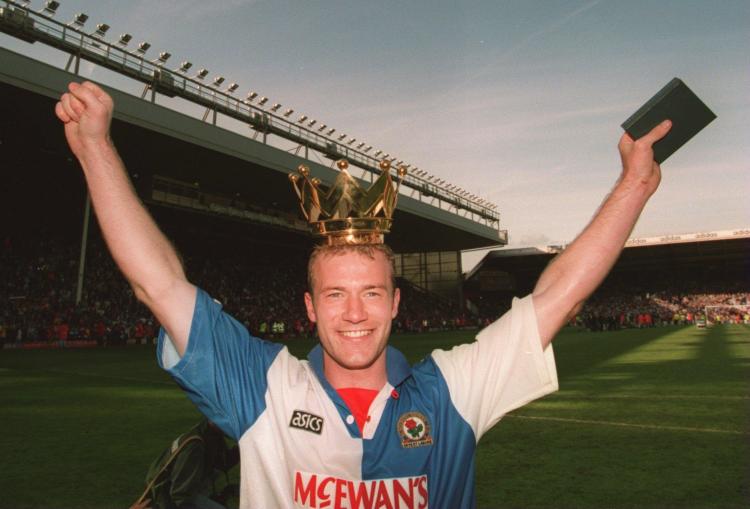
 It was a Sunday evening in August way back in 1993. I was stood in that cauldron of emotion, United Park, where Drogheda United were playing Blackburn Rovers in a pre-season friendly. Blackburn were on the verge of greatness at that point. The first half was scoreless, which was a very good performance from Drogheda United. Kenny Dalglish wasn’t happy. He kept his team on the pitch at half time. Second half – no real change. The he sent on Alan Shearer who nonchalantly scored a couple of goals and basically ended the match. That late summer evening in United Park, I had seen a “game changer”
“Game changer”
It’s a word that gets bandied about a lot in financial markets. People look for that one big thing that sets the direction for prices over the next six months, year, three years. I’m not so sure they exist. It may look like they exist in hindsight like AOL/Time Warner signalling the dot com crash. Actually it was as much coincident as causal. And it’s rarely that simple one single factor or event determining a complex outcome. “Mono-causality” is what people much more intelligent than me call it.
But life is never really that straightforward
If you had the same European history book for Leaving cert as I had, it went through the eight causes of the first World War. Eight!
As another example, reports looking at the 2010 Macondo Deepwater Horizon well blow-out cite between eight and ten reasonably unrelated issues that led to the tragedy.
I think it’s the same in markets. It’s an array of factors that move markets in a certain way, at a certain pace. Today, the removal of Quantitative Easing, and specifically the cessation of bond buying by some of the world’s leading central banks, is seen by some as a possible game changer. Of course, it is important but it has to be seen in the context of many other factors such as improving economies, better corporate earnings, stretched valuations, investor attitudes etc.
Don’t be swayed by bombastic statements that hinge on one single event or factor. It may be dramatic but not really that useful. Also the financial world can be fickle – what seems to be all important today, and garners huge attention and comment, can quickly become an irrelevance.
I recall one day, many years ago, a US strategist called in and told me to forget about things like GDP growth or earnings or suchlike and go and learn everything I possibly could about a man called Ross Perot (then a US Presidential candidate) because his views on tax policy, jobs, international trade was going to be the most important thing in markets for the next three years. Well you know how that went…….
So apart from Alan Shearer that evening in United Park, there aren’t that many.
 Tradewinds